Examining Fee Dynamics in Recurring Mobile Transactions Across Multiple Merchant Account Configurations and Compliance Requirements
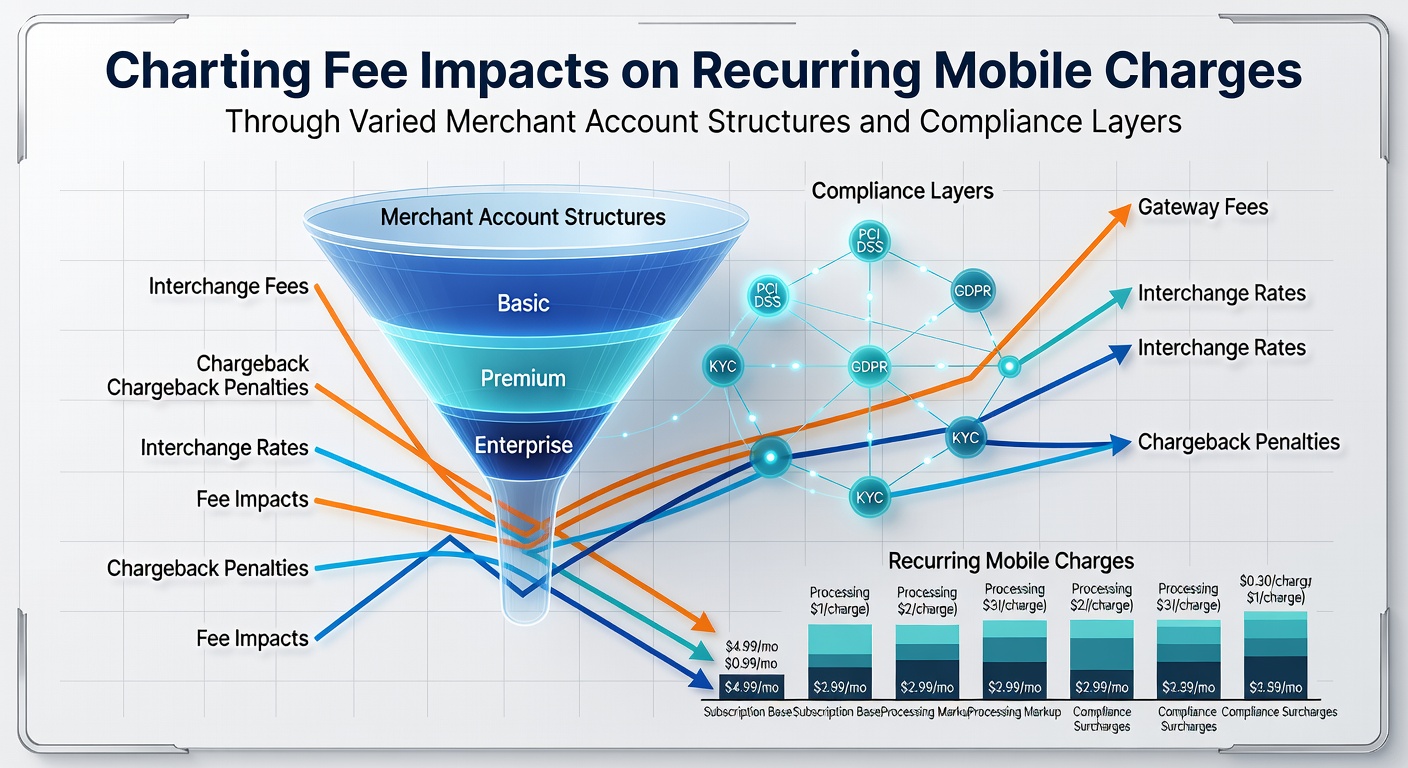
Recurring mobile charges appear in subscription services, app-based memberships, and utility billings where users authorize repeated deductions through their devices, while merchant account structures determine how those transactions route through processors and banks.
Varied account types such as dedicated merchant accounts, aggregated platforms, and high-risk classifications each carry distinct fee schedules that compound over repeated billing cycles, and compliance layers add further costs tied to data security standards, regional regulations, and reporting obligations.
Core Components of Merchant Account Structures
Dedicated merchant accounts connect businesses directly to acquiring banks, which often results in lower per-transaction rates for high-volume recurring mobile payments compared with aggregated setups that pool multiple sellers under one master account, whereas high-risk merchant accounts typically impose elevated fees due to increased chargeback potential in sectors like digital content delivery.
Observers note that account approval processes differ by provider, with some requiring extensive documentation on business models before granting access to mobile billing gateways, and this setup influences how interchange fees, assessment charges, and processor markups combine into the total cost per recurring charge.
How Compliance Layers Influence Fee Calculations
Payment Card Industry Data Security Standard requirements mandate encryption protocols, regular audits, and tokenization for storing payment credentials in mobile environments, which introduces ongoing expenses that processors pass along through monthly compliance fees or adjusted per-transaction rates.
Regional rules such as those enforced by the European Central Bank add reporting mandates for cross-border recurring transactions, while frameworks from the Reserve Bank of Australia emphasize consumer protection disclosures that can necessitate system upgrades and associated costs for merchants handling mobile subscriptions.
Data from industry reports shows these layered obligations often scale with transaction volume, meaning businesses managing thousands of recurring mobile charges face proportionally higher compliance overhead that directly affects net revenue retention.
Tracking Fee Impacts Over Time
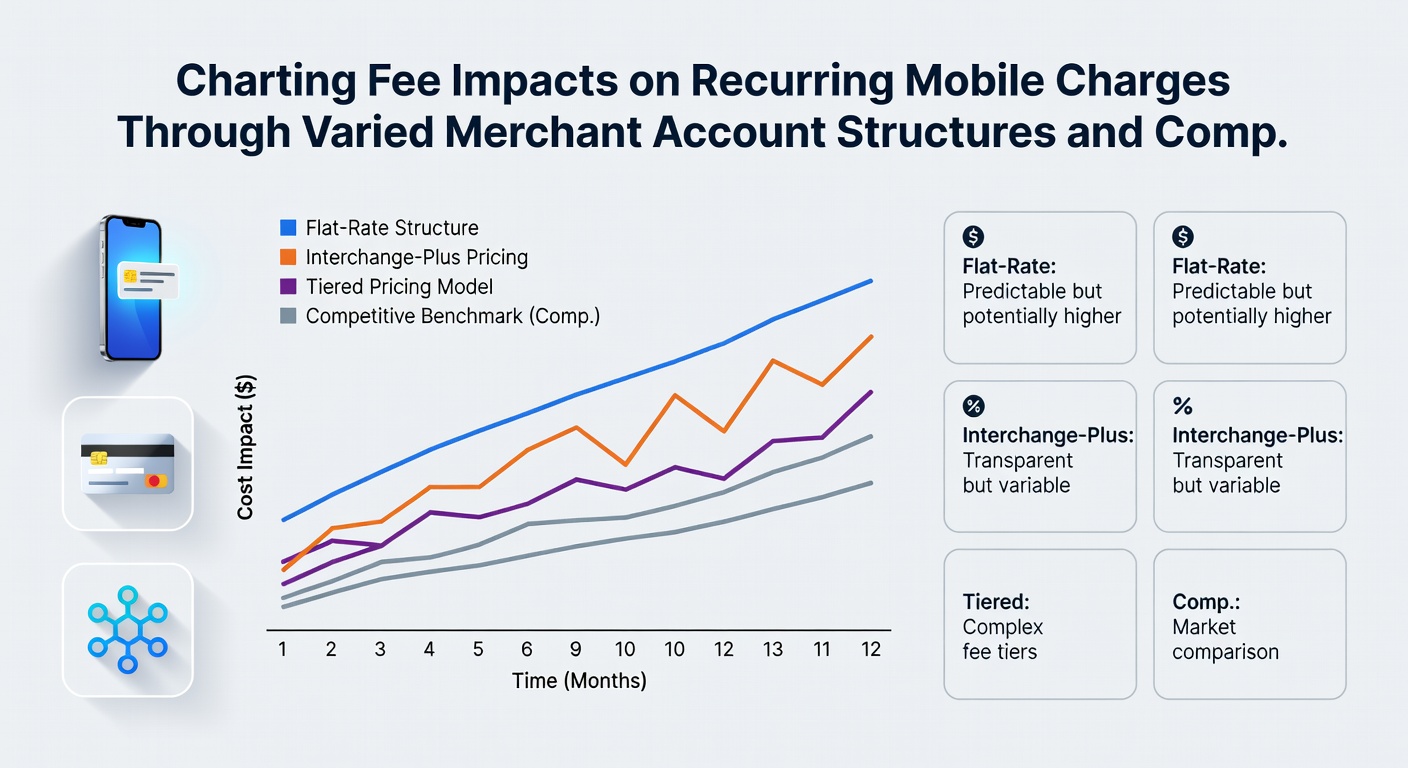
Analysts track these impacts by comparing baseline processing rates against actual billed amounts after compliance surcharges apply, and studies from academic institutions reveal that merchants using aggregated accounts experience fee creep of up to several percentage points over twelve-month periods when recurring volumes increase.
Effective June 2026, updated tokenization mandates from multiple regulatory bodies are expected to require additional infrastructure investments, which observers anticipate will shift fee structures for mobile recurring billing in both dedicated and high-risk account categories.
Those monitoring payment ecosystems point to case examples where businesses transitioned from aggregated to dedicated accounts to reduce cumulative fees, though the move required upfront compliance validation that temporarily elevated setup costs before long-term savings materialized.
Practical Patterns in Mobile Recurring Billing
Evidence indicates that compliance costs distribute unevenly across account types, with dedicated structures absorbing audit expenses more efficiently at scale while aggregated platforms spread those charges across participants, resulting in steadier but sometimes higher per-user fees for smaller operators.
Researchers have documented how interchange rates fluctuate based on card type and transaction risk profile, factors that become pronounced in recurring mobile scenarios where authorization failures trigger retry fees layered on top of standard processing charges.
One study revealed that organizations maintaining multiple account structures for different service tiers often achieve better fee predictability, since they can route high-compliance mobile subscriptions through lower-risk dedicated accounts while directing occasional charges elsewhere.
Conclusion
Mapping these interactions shows that merchant account selection and compliance adherence together determine the overall cost trajectory for recurring mobile charges, and ongoing regulatory developments continue to reshape fee models across regions.
Businesses benefit from reviewing their current configurations against emerging standards to maintain cost efficiency as mobile billing volumes grow.