Credit Card Networks Unpacked: Recurring Billing Effects on Fraud Controls and Merchant Account Fees
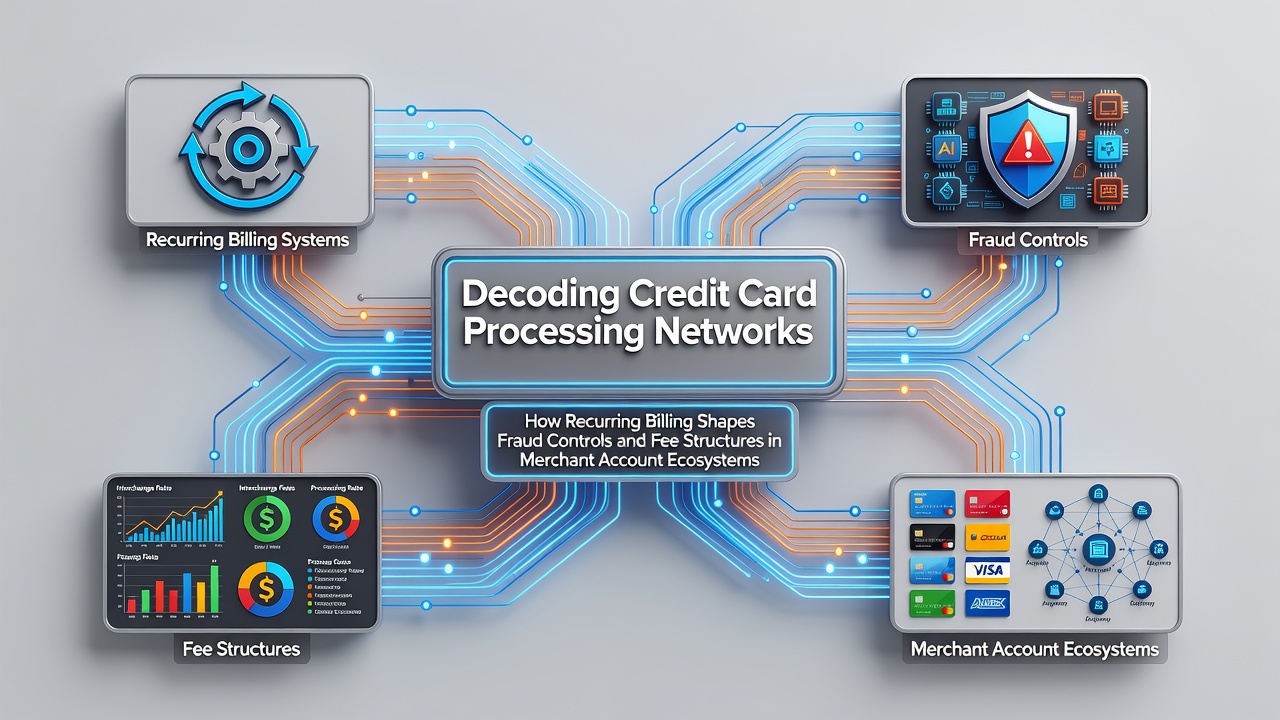
Payment networks such as Visa, Mastercard, American Express, and Discover operate as the central hubs that route authorization requests, clear transactions, and settle funds between merchants and card issuers, while recurring billing introduces specific patterns that alter how these networks manage risk detection and apply fee tiers. Researchers at institutions tracking transaction flows note that subscription-style charges often trigger distinct authorization sequences compared with one-time purchases, because issuers receive repeated signals from the same merchant and card combination over multiple cycles.
Network Infrastructure and Transaction Routing
Card networks maintain the rulebooks that define data fields, security protocols, and settlement timelines, and merchant acquirers connect to these networks through dedicated gateways that format messages according to each scheme's specifications. When a recurring payment request arrives, the network evaluates the transaction type code, the presence of stored credential indicators, and any prior authorization history attached to the account, then routes the message to the issuer for approval or decline. Data compiled by the Federal Reserve shows that recurring volumes have grown steadily, prompting networks to refine their message formats so acquirers can signal continuity and reduce unnecessary declines.
Fraud Controls Adjusted for Recurring Activity
Fraud systems at both network and issuer levels incorporate velocity checks, device fingerprinting, and behavioral analytics that treat recurring series differently from sporadic purchases. A card used for the same amount at the same merchant on a predictable schedule generates lower risk scores after the initial successful transactions, yet networks still require address verification and card verification value checks on subsequent payments unless tokenization has replaced the primary account number. Observers at the European Central Bank report that the adoption of network tokens for recurring use cases rose sharply after 2024, because tokens allow issuers to rotate underlying credentials without interrupting the billing cycle and simultaneously limit exposure if a merchant account suffers a breach.
In June 2026 several networks plan to expand mandatory use of the recurring payment indicator field, which will give issuers clearer visibility into expected future charges and enable more granular decline logic when sudden amount changes appear. This adjustment builds on existing frameworks that already flag high-risk merchant categories, and it reflects ongoing collaboration between networks and regulators focused on reducing unauthorized recurring charges.
Fee Structures Influenced by Billing Cadence
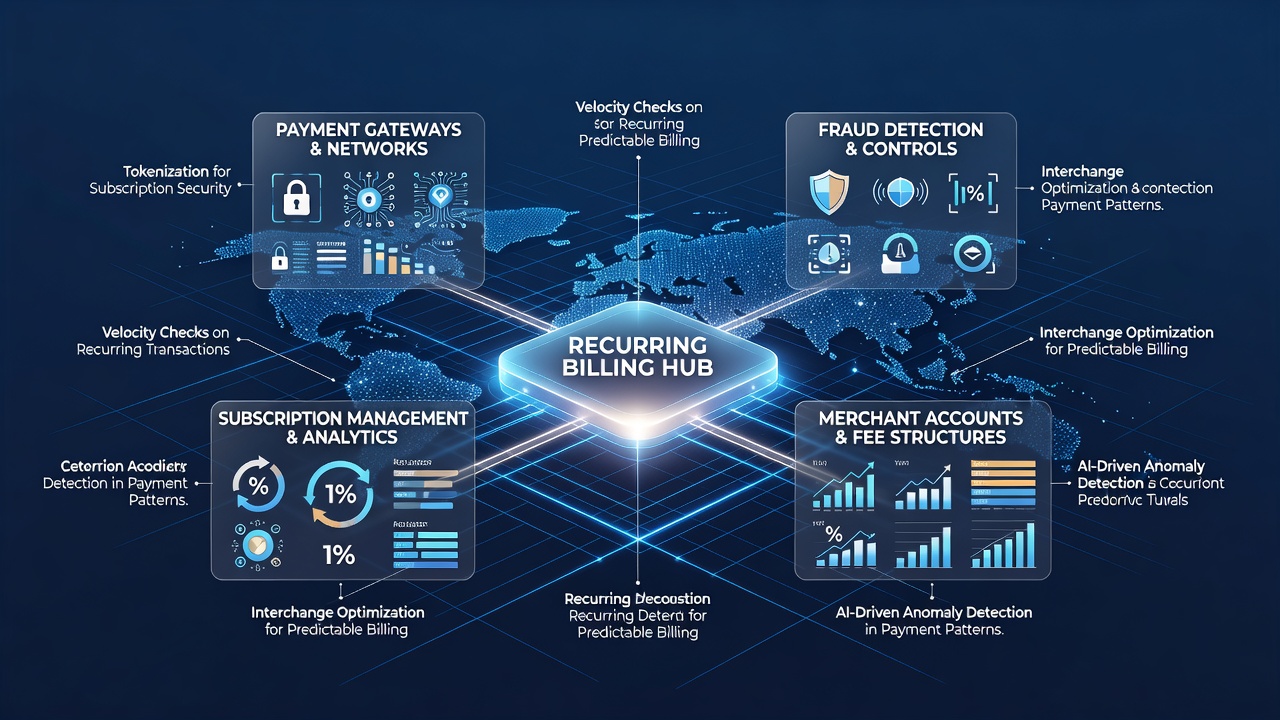
Interchange rates published by the networks contain specific categories for recurring transactions, and these rates often sit below standard retail rates because historical chargeback ratios for well-managed subscription portfolios tend to be lower once initial verification succeeds. Acquirers pass these rates to merchants along with their own markup, while additional assessments for data security compliance or cross-border routing still apply if the card issuer sits outside the merchant's domestic region. Studies from the Reserve Bank of Australia indicate that merchants offering monthly services frequently negotiate blended pricing that accounts for both the recurring volume and the occasional failed payment retry, because retry logic itself can trigger separate network fees when multiple authorization attempts occur within a short window.
Tokenization programs also carry their own fee schedules; networks charge token creation and maintenance fees that merchants absorb either directly or through their acquirer, yet the reduction in fraud losses and the ability to update credentials centrally often offset those incremental costs over time. Merchant account agreements therefore itemize these components separately so businesses can model the true cost of maintaining an active subscriber base.
Merchant Account Ecosystem Considerations
Underwriting teams at acquiring banks review historical recurring chargeback ratios, average ticket size, and billing frequency when assigning processing rates and reserve requirements. A merchant whose subscriber base exhibits stable retention and low dispute volumes may receive more favorable terms, whereas accounts showing elevated failure rates or sudden spikes in amount changes face tighter monitoring and possible rolling reserves. Processors integrate these metrics into their dashboards, allowing risk teams to compare a given merchant's performance against network-wide benchmarks published in periodic reports.
Case examples shared by industry analysts illustrate how a streaming service that introduced variable add-on charges saw its effective interchange rate shift because the network reclassified a portion of transactions outside the pure recurring category. Such reclassifications affect both fraud scoring and settlement timing, because certain add-on purchases fall under different dispute windows than the core subscription fee.
Conclusion
Credit card processing networks continue to refine message standards, token frameworks, and fee schedules in response to the growth of recurring billing, while fraud controls evolve to balance authorization success rates against loss prevention. Merchant acquirers and issuers alike rely on the same underlying data streams to calibrate their systems, and regulatory bodies across multiple regions monitor these developments to ensure consumer protections remain aligned with changing payment patterns. The interplay between recurring transaction coding, network rules, and pricing models therefore shapes day-to-day operations for any business that relies on predictable customer billing cycles.