Allocation of Fees in Merchant Accounts Processing Recurring Mobile Charges in Line with PCI Standards
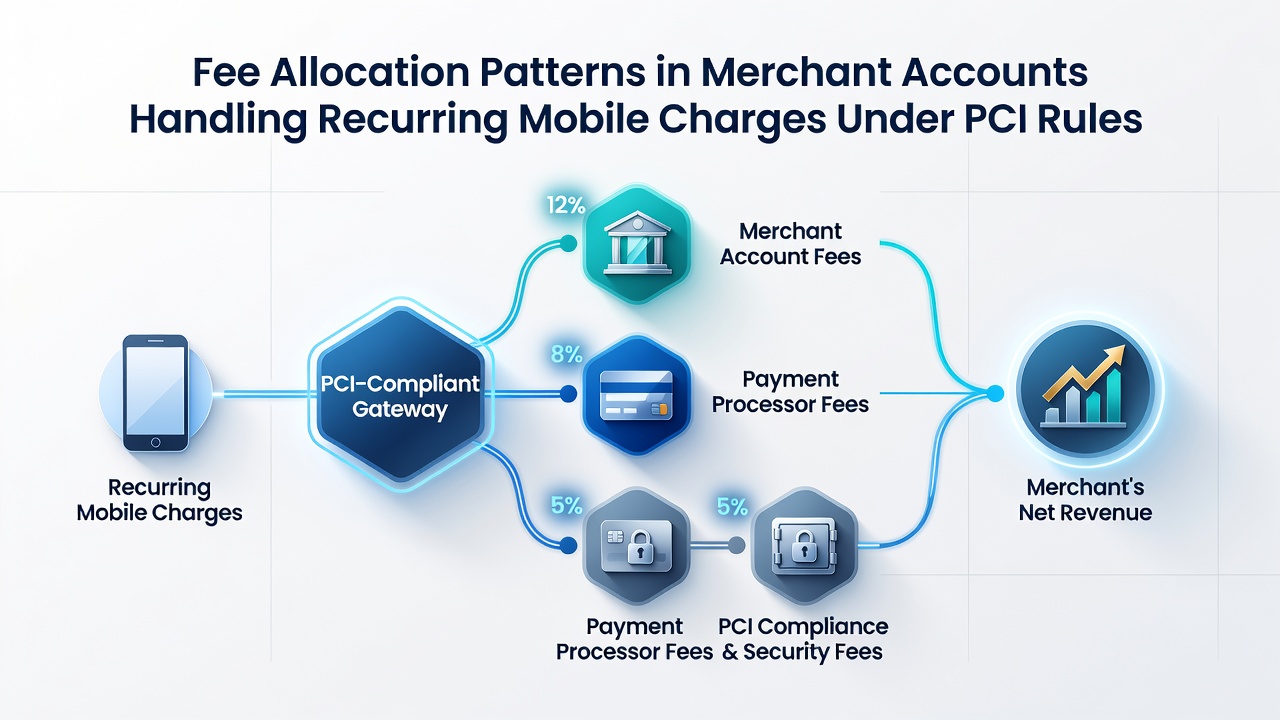
Merchant accounts handling recurring mobile charges follow distinct fee allocation patterns shaped by PCI DSS requirements, where security mandates directly influence how interchange fees, processing costs, and compliance expenses distribute among acquirers, issuers, and merchants. Data from payment networks shows these patterns emerge because recurring transactions on mobile devices require tokenization and continuous authentication protocols that add measurable overhead to standard fee structures.
Core Components of Fee Allocation in Recurring Mobile Processing
Interchange fees typically represent the largest portion passed to card issuers, while acquirers retain assessment fees and merchants absorb processing markups plus any PCI-related surcharges for maintaining secure environments. Research indicates that mobile recurring charges often trigger additional tokenization fees because PCI standards require unique tokens for each subscription cycle to prevent storage of sensitive card data on merchant systems.
Acquirers allocate these costs through tiered pricing models where high-volume recurring merchants receive blended rates that incorporate PCI compliance overhead, whereas smaller operators face separate line items for encryption services and vulnerability scanning. Studies from payment processors reveal that June 2026 marks the scheduled review period for several network rules on mobile token provisioning, which may adjust how these compliance costs factor into recurring billing cycles.
Impact of PCI DSS on Mobile Recurring Fee Structures
PCI DSS compliance requires segmentation of cardholder data environments, a process that increases operational expenses for merchants processing recurring mobile payments through apps or in-app billing. According to the PCI Security Standards Council documentation, organizations must implement strong access controls and regular testing, costs that processors often pass along via elevated per-transaction fees or monthly account maintenance charges.
Fee allocation patterns shift when merchants use third-party tokenization services because liability shifts reduce certain risk premiums yet introduce service provider fees that networks distribute differently across the transaction chain. Observers note that mobile-specific recurring charges frequently incur higher assessment rates due to elevated fraud vectors associated with device-based authentication compared to desktop-initiated subscriptions.
Regional Variations in Fee Distribution Patterns
Payment networks in North America apply fee structures that bundle PCI compliance into base rates more frequently than European models, where separate security levies appear on merchant statements for recurring mobile activity. Data from the European Central Bank shows acquirers in EU markets allocate a larger share of tokenization costs directly to merchants handling subscription billing through mobile wallets.
Canadian processors, by contrast, incorporate PCI audit expenses into volume-based tiers that favor established merchants with predictable recurring mobile revenue streams. These differences create distinct allocation patterns where cross-border transactions require additional currency conversion fees layered on top of standard compliance charges.
Practical Examples of Fee Flow in Mobile Recurring Accounts
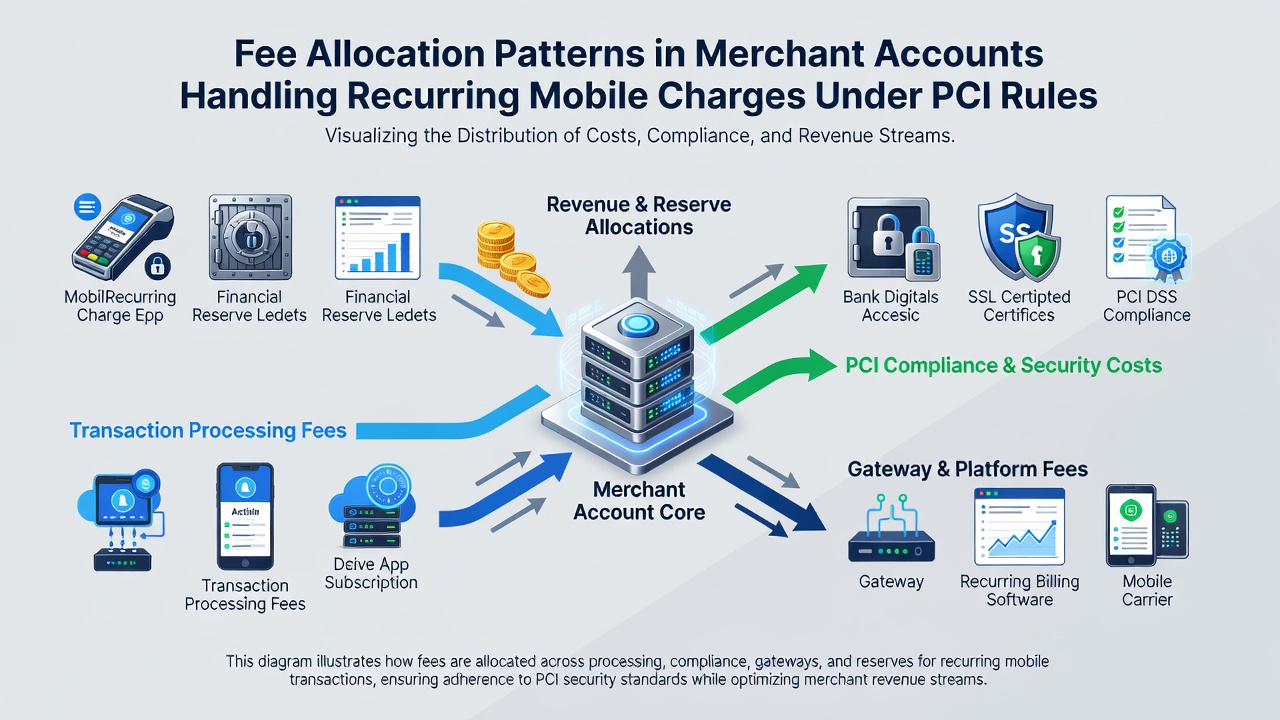
Take one mid-sized subscription service processing monthly mobile charges: the acquirer deducts interchange first, followed by network assessments, then applies a PCI compliance surcharge before depositing the remainder. Researchers found this sequence produces predictable allocation ratios where security-related fees account for 8 to 12 percent of total processing costs on recurring mobile transactions.
Another case involves merchants using hosted payment pages that meet PCI SAQ A requirements, resulting in lower fee markups because reduced compliance scope allows processors to allocate fewer resources toward data protection overhead. Industry reports confirm these patterns hold steady across multiple billing cycles provided merchants maintain current PCI attestations.
Emerging Trends Through Mid-2026
Network updates scheduled for review in June 2026 may alter how mobile recurring charges factor PCI scope into fee calculations, particularly around requirements for point-to-point encryption on device-initiated payments. Figures from payment associations indicate growing adoption of dynamic tokenization will redistribute certain security costs away from merchants and toward issuers in subsequent allocation models.
Those monitoring these developments note that recurring mobile billing volumes continue expanding, which pressures processors to refine fee structures while preserving PCI compliance margins. Evidence suggests blended pricing that absorbs compliance expenses will become more common as mobile subscription services scale.
Conclusion
Fee allocation patterns in merchant accounts handling recurring mobile charges remain tightly linked to PCI DSS obligations that dictate specific security investments and their distribution across transaction participants. Documentation from regulatory bodies and network operators demonstrates consistent structures where tokenization, authentication, and compliance verification generate distinct cost layers applied differently by region and merchant scale. Continued evolution of these patterns through 2026 will depend on updates to mobile payment protocols and corresponding adjustments in how networks assign responsibility for maintaining secure recurring billing environments.